
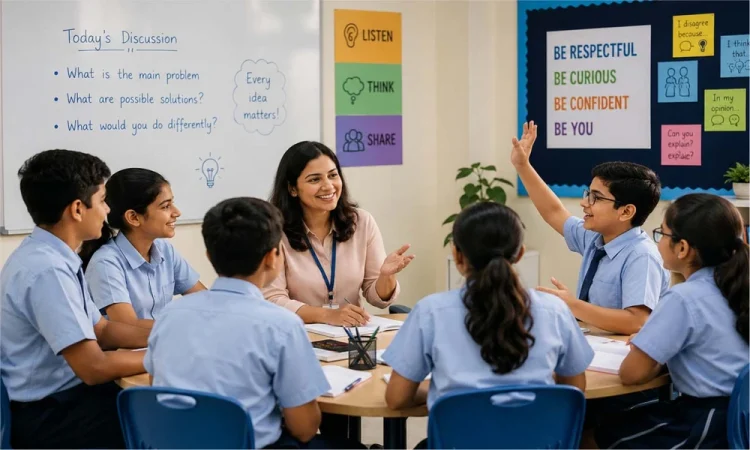
Education today goes beyond learning facts, memorising concepts, and achieving good grades. Students need the ability to think independently, analyse situations, make informed decisions, and find solutions to real-world challenges. Developing these skills from an early age helps children become confident learners who can adapt to changing environments. This is one of the key reasons why IB schools in Mumbai are gaining attention among parents seeking a well-rounded and globally focused education for their children.
The International Baccalaureate (IB) programme follows a learning approach that encourages curiosity, exploration, and active participation. Instead of relying entirely on traditional classroom instruction, students are motivated to ask questions, investigate topics, share ideas, and discover answers independently. This approach creates meaningful learning experiences while strengthening critical thinking and problem-solving abilities.
1. Encouraging Curiosity Through Inquiry-Based Learning
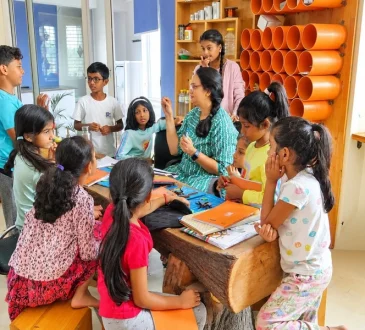
Inquiry-based learning is an important part of the IB educational approach. Students are encouraged to explore subjects by asking questions, researching information, and understanding concepts through discovery.
Rather than simply accepting information provided by teachers, learners investigate different perspectives and develop their own understanding. For example, while studying environmental issues, students may explore the causes of pollution, examine its effects, and suggest practical ways to protect natural resources.
This process develops curiosity and teaches students to approach unfamiliar situations with an open and analytical mindset.
2. Developing Critical Thinking Skills
Critical thinking helps students evaluate information, identify challenges, and make logical decisions. The IB programme incorporates activities that encourage learners to analyse information instead of memorising it.
Classroom discussions, research assignments, case studies, and presentations allow students to examine different viewpoints and support their opinions with relevant evidence.
By participating in these activities, children learn to distinguish between facts and assumptions, recognise patterns, and make thoughtful conclusions. These skills are valuable not only for academic success but also for handling everyday situations.
3. Promoting Real-World Problem-Solving
Connecting classroom learning with real-life situations makes education more meaningful. The IB approach encourages students to apply theoretical knowledge to practical challenges through projects, experiments, and collaborative activities.
For instance, students might work on reducing waste within their school environment, designing solutions for water conservation, or exploring ways to improve their local community.
Such experiences help learners understand that problems can have multiple solutions. They also develop the confidence to experiment, evaluate outcomes, and improve their ideas when challenges arise.
4. Building Confidence Through Independent Research
Independent research gives students opportunities to take responsibility for their learning. They identify topics of interest, collect relevant information, evaluate resources, and present their findings.
These activities strengthen research, organisation, communication, and decision-making skills. Students gradually become more comfortable working independently and taking ownership of their academic progress.
The ability to find reliable information and form well-supported conclusions also prepares them for higher education and future professional responsibilities.
5. Strengthening Collaboration and Communication
Problem-solving often involves understanding different perspectives and working with others. The IB programme encourages group discussions, collaborative projects, and classroom activities where students exchange ideas and develop solutions together.
Working in teams teaches children to listen actively, communicate clearly, respect differences, and contribute constructively. They also learn how to manage disagreements and reach decisions through discussion.
These experiences build interpersonal skills and prepare students to work confidently in diverse environments.
6. Encouraging Reflection and a Growth Mindset
Learning from mistakes is an essential part of developing independent thinkers. The IB approach encourages students to reflect on their performance, recognise areas for improvement, and consider alternative ways of approaching challenges.
Instead of viewing mistakes as failures, students learn to treat them as opportunities for growth. Regular reflection helps them understand their strengths, improve their strategies, and become more resilient when facing difficult tasks.
Preparing Students for a Future of Opportunities
Independent thinking and problem-solving are essential skills for success in higher education, professional environments, and everyday life. The IB programme creates opportunities for students to develop these abilities through inquiry, research, collaboration, practical learning, and reflection.
For parents exploring IB schools in Mumbai, choosing an educational environment that values curiosity, creativity, and independent learning can make a meaningful difference in a child’s development. By encouraging students to question, explore, analyse, and find solutions, the IB approach helps nurture confident, responsible, and adaptable individuals who are prepared to embrace future opportunities.