

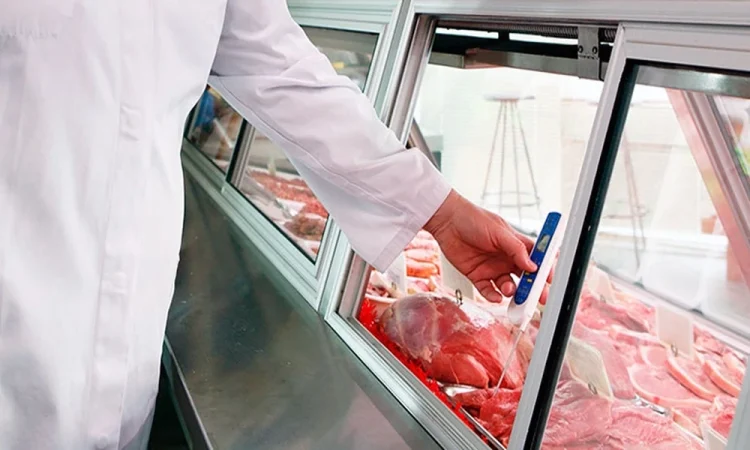
Quick Answer
The 7 Principles of HACCP form the internationally recognised framework for food safety management: hazard analysis, identifying critical control points, setting limits, monitoring, corrective action, verification, and documentation. Together, they guide a complete HACCP Risk Assessment and the creation of a working HACCP Plan. Irish HACCP’s Level 2 course covers each principle in practical detail.
Key Facts Table
| Principle | Purpose |
|---|---|
| 1. Hazard Analysis | Identify biological, chemical, physical risks |
| 2. Critical Control Points | Pinpoint where hazards can be controlled |
| 3. Critical Limits | Set measurable safety boundaries |
| 4. Monitoring Procedures | Track control points consistently |
| 5. Corrective Actions | Define responses when limits are breached |
| 6. Verification | Confirm the system works as intended |
| 7. Documentation | Maintain records for accountability |
Introduction
Every effective HACCP Plan is built on the same internationally recognised foundation: the 7 Principles of HACCP. Understanding these principles isn’t just theoretical – it’s the practical basis for conducting a proper HACCP Risk Assessment in any Irish food business, from a single café kitchen to a multi-site catering operation. Irish HACCP’s training translates each principle into concrete, workplace-ready actions.
Main Content
Principle 1: Conduct a Hazard Analysis
This first step identifies potential hazards – biological (bacteria), chemical (cleaning agents), and physical (foreign objects) – at every stage of food handling. A thorough HACCP Risk Assessment starts here, mapping out where contamination could realistically occur in a specific kitchen or process.
Principle 2: Identify Critical Control Points
Critical control points (CCPs) are the specific steps where a hazard can be prevented, eliminated, or reduced to a safe level – such as cooking temperature or chilled storage. Not every step in a process is a CCP; identifying the right ones is core to an effective HACCP Plan.
Principle 3: Establish Critical Limits
Each CCP needs a measurable limit, such as a minimum cooking temperature of 75°C for poultry. These limits separate safe from unsafe conditions and form the backbone of daily monitoring.
Principle 4: Establish Monitoring Procedures
Monitoring confirms that critical limits are being met in real time – through temperature logs, visual checks, or timed processes. Consistent monitoring is often the weakest link in poorly maintained HACCP systems.
Principle 5: Establish Corrective Actions
When monitoring reveals a critical limit hasn’t been met, a predefined corrective action must follow – discarding food, reheating, or adjusting equipment. Having this planned in advance prevents panic decisions during service.
Principle 6: Establish Verification Procedures
Verification checks that the entire HACCP system is functioning as designed, through periodic review, calibration checks on thermometers, and internal audits.
Principle 7: Establish Record-Keeping and Documentation
Documentation proves the system works and provides the evidence inspectors expect to see. Without records, even a well-run HACCP plan is difficult to verify externally.
Comparison: Hazard Types in Risk Assessment
| Hazard Type | Example | Control Method |
|---|---|---|
| Biological | Bacteria, viruses | Correct cooking and storage temperatures |
| Chemical | Cleaning agents, allergens | Proper storage separation, labelling |
| Physical | Glass, metal fragments | Equipment maintenance, visual checks |
Step-by-Step: Building a HACCP Plan
- Map your full food process, from delivery to service.
- Apply the 7 Principles systematically at each stage.
- Document everything in a written HACCP Plan.
- Train relevant staff through Irish HACCP’s Level 1 & 2 course.
- Review and update the plan whenever processes change.
Common Mistakes to Avoid
- Treating every process step as a critical control point: This dilutes focus from genuinely high-risk areas.
- Setting vague critical limits: Limits must be specific and measurable, not general guidance.
- Skipping verification: Monitoring alone doesn’t confirm the system is genuinely effective.
- Incomplete documentation: Missing records are a common and avoidable inspection failure.
- Building a plan without supervisor training: Level 2 knowledge is essential for accurate hazard analysis.
FAQ Section
Q: What are the 7 Principles of HACCP in simple terms? A: They guide food businesses to identify risks, control them at key points, set safety limits, monitor consistently, fix problems quickly, verify the system works, and keep records.
Q: Who is responsible for conducting a HACCP Risk Assessment? A: Typically a trained supervisor or manager with Level 2 HACCP certification, such as that offered by Irish HACCP.
Q: Does every food business need a written HACCP Plan? A: Yes, under EU food hygiene law, all food businesses must operate documented, hazard-based procedures.
Q: How are critical control points identified? A: Through systematic hazard analysis of each process step, focusing on points where control genuinely prevents or reduces risk.
Q: Can small businesses simplify their HACCP Plan? A: Yes, plans can scale to business complexity while still covering all 7 principles.
Q: How does training relate to applying these principles correctly? A: Structured training, like Irish HACCP’s Level 2 course, teaches practical application of each principle to real kitchen scenarios.
Key Takeaways
- The 7 Principles of HACCP provide a complete, structured approach to food safety management.
- A proper HACCP Risk Assessment identifies real hazards, not just generic concerns.
- Documentation and verification are often the most overlooked but essential principles.
- Irish HACCP’s training equips supervisors to apply these principles correctly.
Conclusion
Mastering the 7 Principles of HACCP transforms food safety from a vague obligation into a clear, actionable system. Whether building a new HACCP Plan or refining an existing HACCP Risk Assessment, structured training makes the difference. Visit www.irish-haccp.ie to enrol in the HACCP Food Safety Level 1 & 2 course today.